Strategy
- Funding is secured for at least the next 4 years.
- Within that timeframe, do interesting research (LLM/reasoning/RLVR, and ARC v3).
- This should open new financing and recruiting opportunities (hopefully elevating the lab from GPU-poor to GPU-middle-class to GPU-rich).
- Move on to more challenging benchmarks.
Values
Intellectual curiosity, high intrinsic motivation (obsession), perseverance. Fast experimentation process.
We are driven primarily by the desire to reverse engineer intelligence and build machines according to those principles.
Regarding AI safety: we believe that after reaching a certain level of capability, AI safety will become a critical issue and is likely to constitute an existential threat. But first we want to carry out the capability research and reassess as we go. We will have a process where AI safety can be made the top priority.
Compute
| Capacity | GPUs | Compute FP4 (sparse/dense) |
Memory | Memory bandwidth |
Power |
|---|---|---|---|---|---|
| Current: 6x 8 DGX B200 * [1] | 48 B200 (8 per cluster) | 864 PFLOPS sparse, 432 PFLOPS dense [2] (144 sparse, 72 dense per cluster) | 8.64 TB HBM3e [1] (1.44 TB per cluster) | 384 TB/s [2] (64 TB/s per cluster) | 85.8 kW max [3] (14.3 kW per cluster) |
| Expected summer 2026: 2x NVL72 GB300 * [4] | 144 B300 (72 per cluster) | 2880 PFLOPS sparse, 2160 PFLOPS dense [4] (1440 sparse, 1080 dense per cluster) | 74 TB memory [4] (37 TB per cluster) | 1152 TB/s [4] (576 TB/s per cluster) | 300 kW rented (150 kW per cluster) |
| Extra rented capacity | On-demand external clusters | ||||
* We purchase these clusters and deploy them in rented data center space.
People
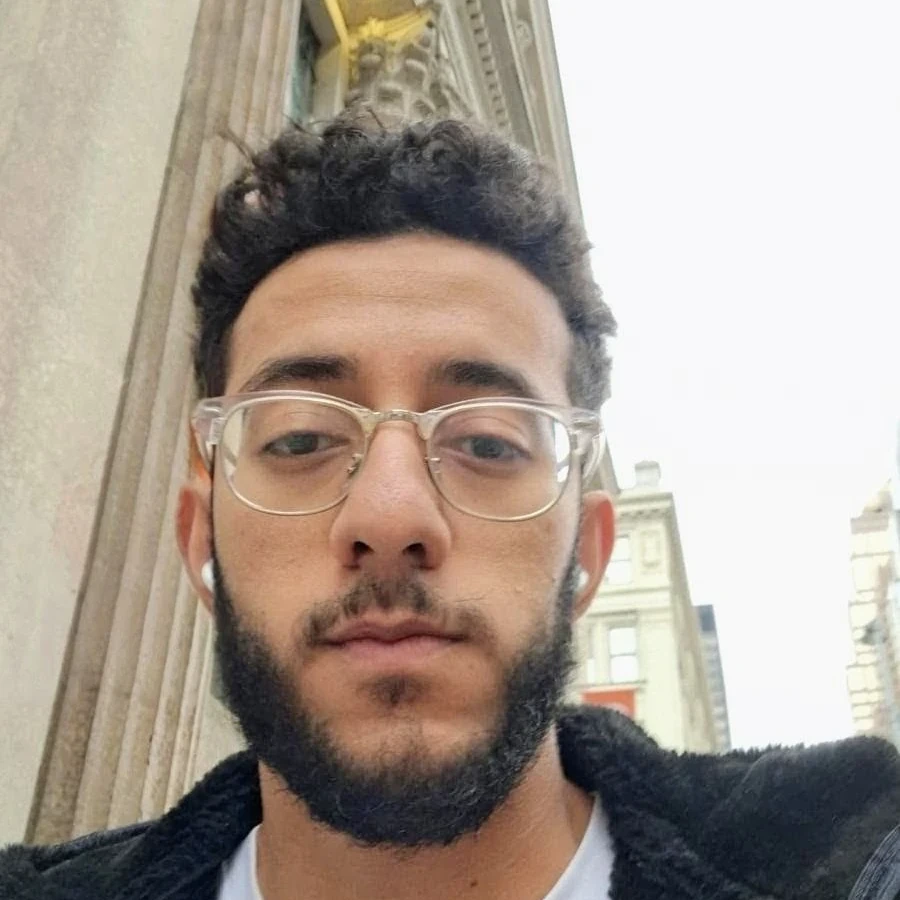 Mohamed OsmanAI Researcher
Mohamed has four years of work experience in developing deep learning models and multiple successful real-world deployments under his belt.
Research interests: Meta learning, reasoning, test-time learning, active inference, few-shot learning, data scarcity
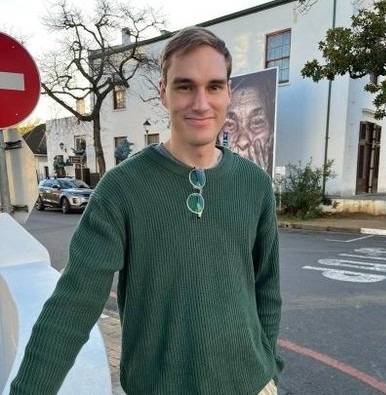 Dries SmitAI Researcher
Dries is a researcher specialising in reinforcement learning, multi-agent systems, and large language models, with a strong track record of applying these techniques in medical and financial domains. Dries led the team behind Laila, a fine-tuned variant of Llama 3.1 designed to assist biologists by interfacing directly with laboratory equipment. His research currently focuses on large-scale training and reinforcement learning; follow his latest work on driessmit.github.io.
Research interests: Reinforcement learning, multi-agent systems, large language models, large-scale AI training, biomedical applications, foundational model enhancement, autonomous systems, curiosity-driven learning
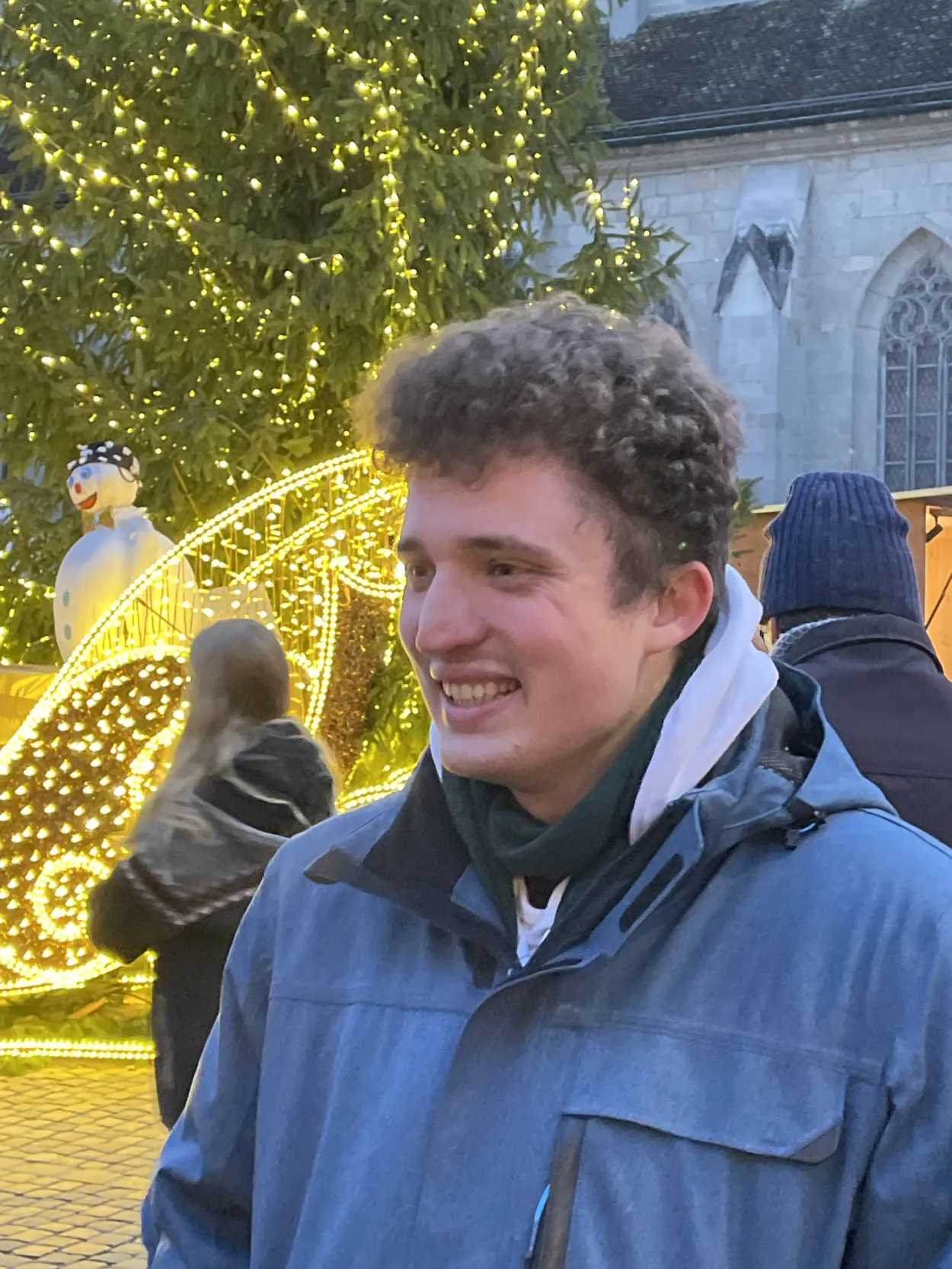 Dominique GarmierAI Researcher
Dominique has a bachelor’s in mathematics and is currently pursuing his master’s with a focus on analysis.
Research interests: reasoning, formal proofs, statistical learning theory, functional analysis, ergodic theory, dynamical systems
 Isaiah PressmanAI Researcher
Isaiah is a research engineer with a focus on self-play reinforcement learning and the techniques needed to train large-scale deep learning models. His background includes machine learning engineering for dynamic pricing, applying computer vision to histopathology research, and multiple 1st- and 2nd-place finishes in Kaggle competitions.
Research interests: self-play, reinforcement learning, in-context learning, reasoning models
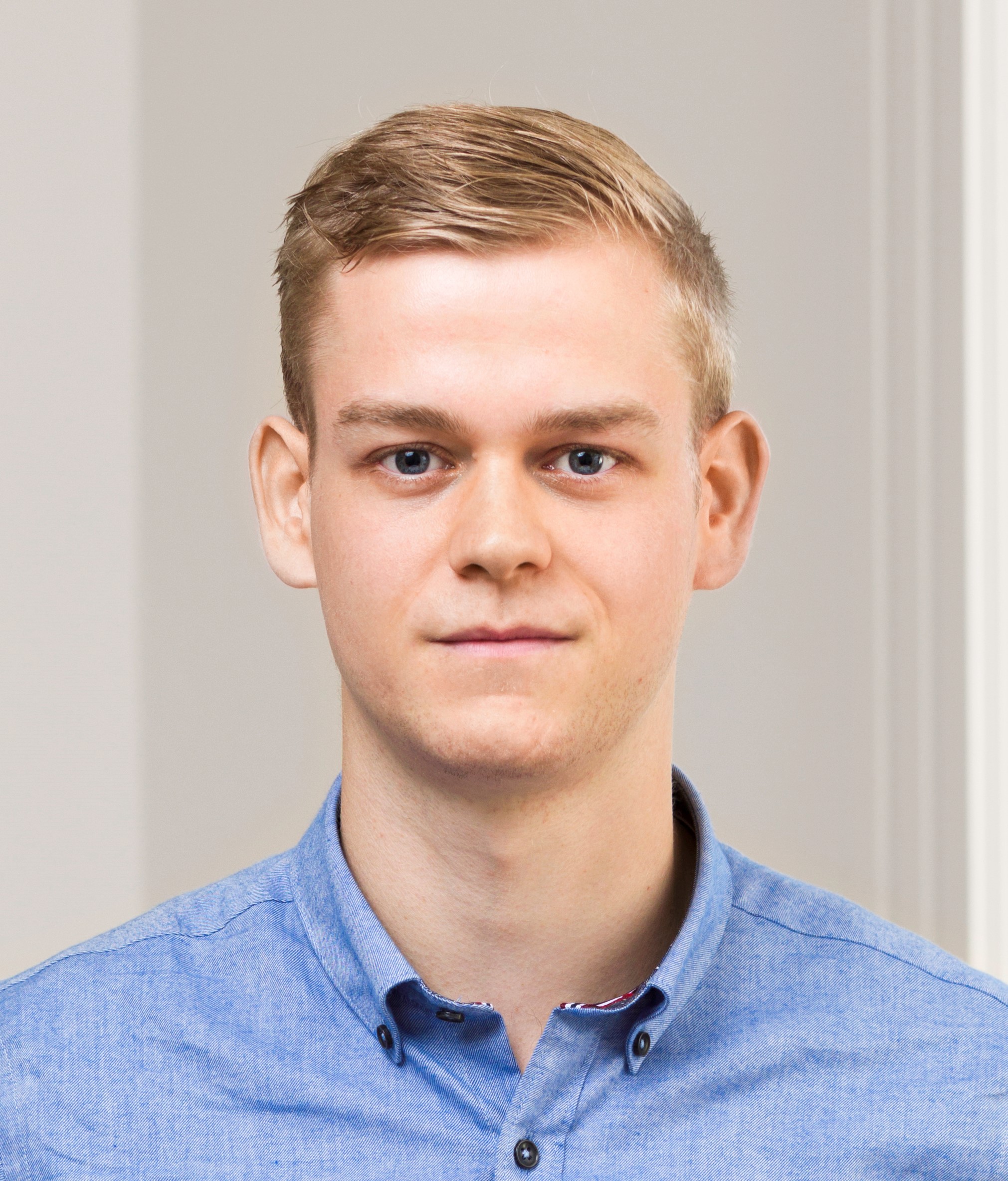 Jerome SieberAI Researcher
Jerome is an AI researcher focusing on deep sequence model architectures and reasoning models. He holds a PhD in control theory from ETH Zurich, where he worked on optimal control for dynamical systems and sequence model architectures. His research spans various domains, including robotics, dynamical systems, and artificial intelligence. Jerome has published several papers on control theory and machine learning, contributing to advancements in predictive control and fundamental understanding of sequence models.
You can find Jerome’s latest work on Google Scholar.
Research interests: sequence model architectures, reasoning fundamentals, test-time RL, model normalization, optimization techniques, dynamical systems
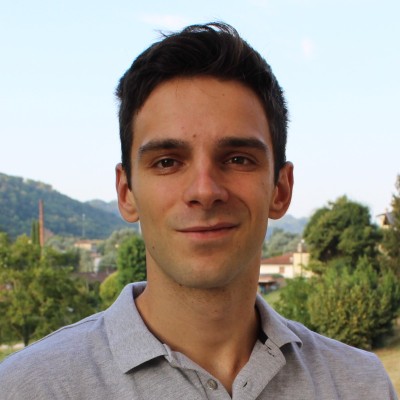 Stefano VielAI Researcher
Stefano has a master’s in data science from EPFL. There, he primarily conducted research on reinforcement learning, large language models, and computational social science.
Research interests: reinforcement learning, unsupervised environment design, meta learning, synthetic data generation, curiosity-driven learning, and large language models
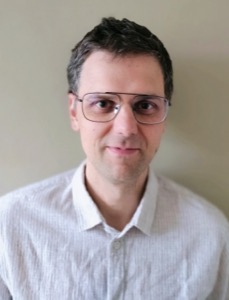 Jeroen CottaarAI Researcher
Jeroen has a PhD in Applied Physics from Eindhoven University of Technology and over 10 years of industry experience at ASML, where he architected Bayesian machine learning approaches for semiconductor metrology. He is a top-5 Kaggle competitor with multiple 1st and 2nd place finishes across diverse domains, with solutions ranging from principled Bayesian inference to genetic algorithms with custom CUDA kernels. He now aims to merge Bayesian methods with LLM reasoning approaches.
Research interests: reasoning, abstraction, test-time computation, program synthesis, Bayesian inference, Gaussian processes, scientific machine learning
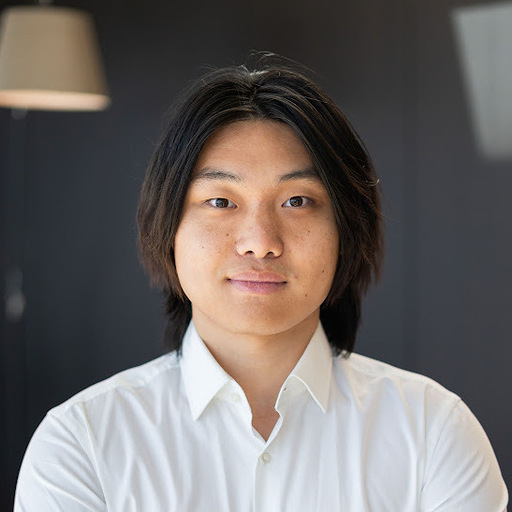 Tommy HeAI Researcher
Tommy has a Bachelor’s in math & computer science, worked on research in cryptography and ML, and previously co-founded YC company Clarum building AI agents for investing. His previous experience spans working on nanosecond HFT systems to privacy preserving ad-tech solutions.
Research interests: reasoning, RL, self-play, interpretability, geometry of learning, mathematical foundations of learning systems
 Victor MerckléAI Researcher
Victor is a machine learning researcher with a background in reinforcement learning and deep learning. He studied computer science at ENS Lyon. His work looks at the theory of neural network training, including how the geometry of data shapes optimization landscapes in ReLU networks. He has also worked on LLM systems, agents, and search methods for games and logic problems. Check out his work on his website.
Research interests: unsupervised training, game AI, search, coding agents, mechanical sympathy, automating research
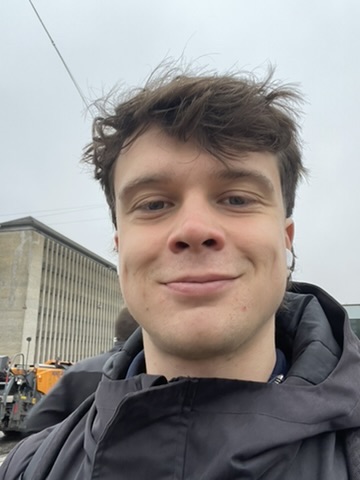 Andrin RehmannAI Researcher
Andrin has a master’s in Computational Science from the University of Zurich and was most recently a research engineer at Pasteur Labs, where he worked on differentiable systems, inverse design, and neural surrogates. Previously he has dabbled in computer graphics, high-performance computing, and graph neural networks, and spent his university years simulating the universe — from GPU-accelerated N-body codes to predicting dark matter with neural networks. Find his work on andrinrehmann.ch.
Research interests: scientific machine learning, test-time optimization, astrophysics, real-time rendering
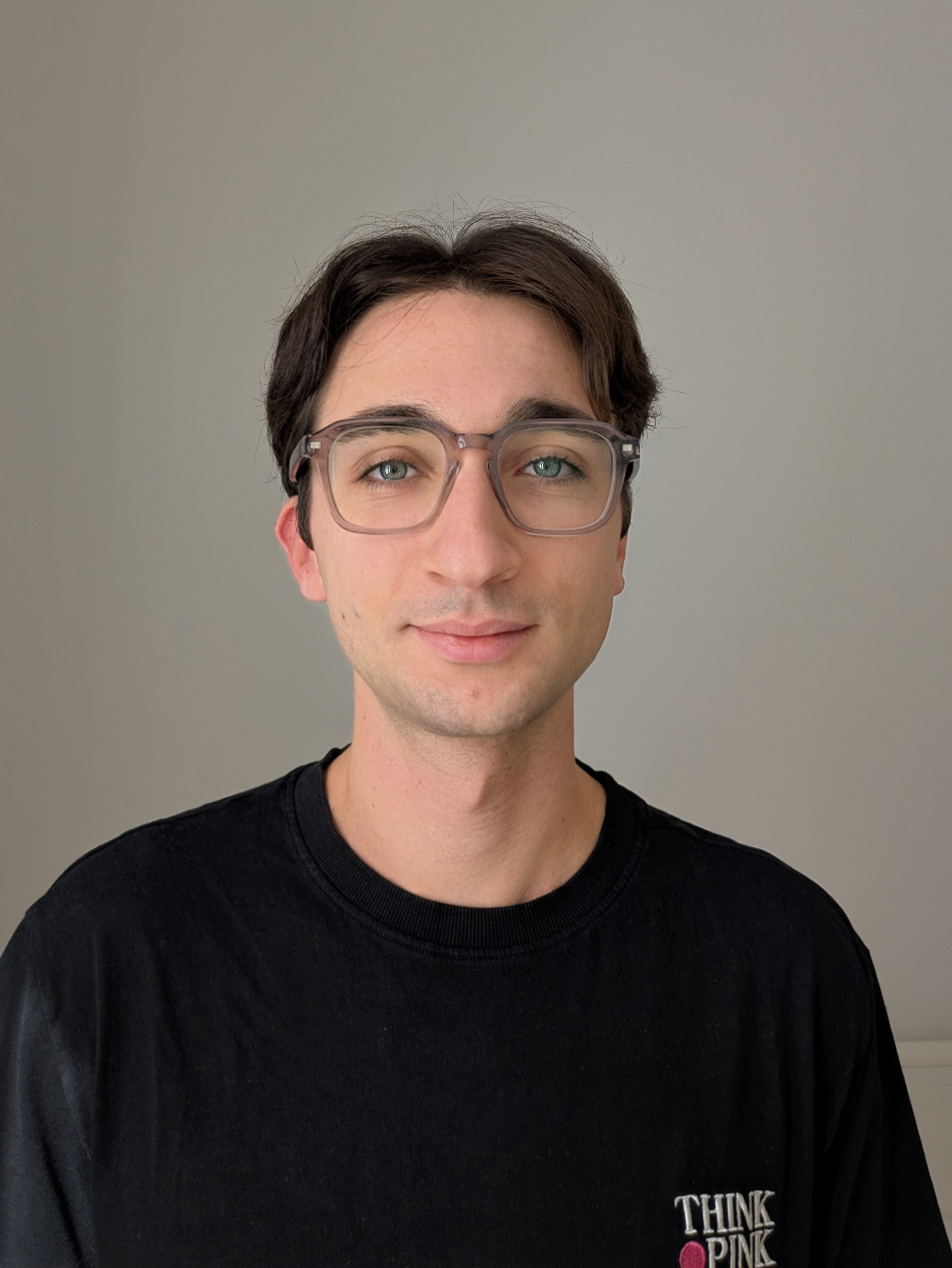 Matteo SantelmoAI Researcher
Matteo has a master’s in Data Science from EPFL, where his research focused on understanding LLM reasoning and improving it through post-training. He has also been a core contributor to RLVR training for open LLMs within Swiss AI.
Research interests: LLM reasoning, reinforcement learning, scalable post-training, self-play, AI-based discovery
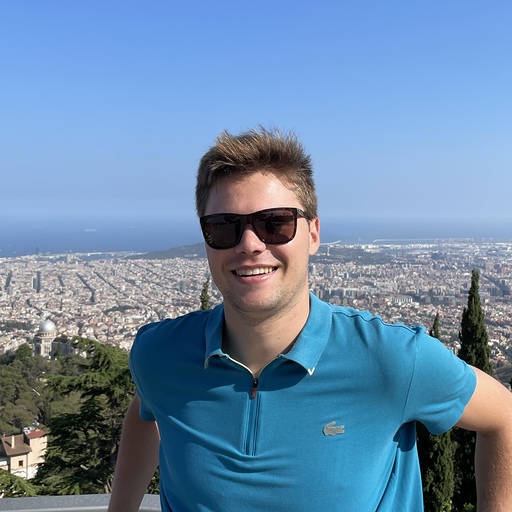 Juan Garcia GiraldoAI Researcher
Juan explores LLM post-training, with a particular interest in the relationship between supervised fine-tuning and reinforcement learning, and how their interaction can improve reasoning and optimization. He has been a core contributor to the post-training pipelines of the open-source Apertus LLMs.
Research interests: reasoning, off-policy reinforcement learning, SFT–RL interactions, and low-precision RL training
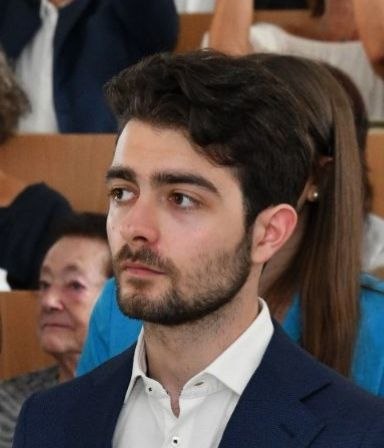 Alessandro TazzaAI Researcher
Alessandro has a BSc in Computer Engineering and is currently pursuing an MSc in Computer Science at ETH, with a focus on Machine Learning Systems.
Research interests: HPC, MLSys, GPGPU, Hardware/Software Co-Design, FPGAs, and Heterogeneous Computing
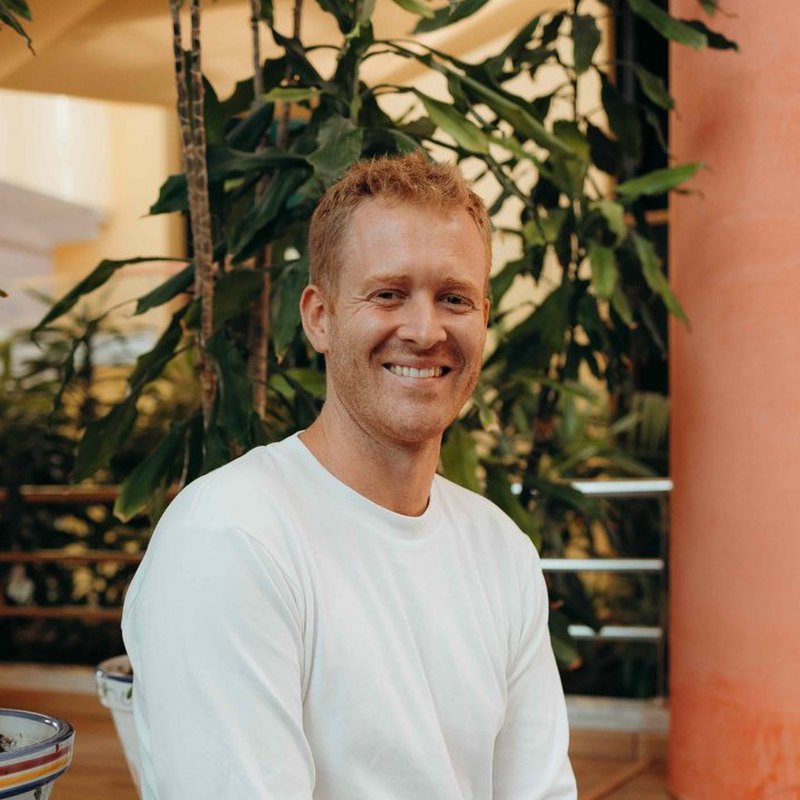 Angus AdamsChief Operating Officer
Angus works on the operating layer around Tufa Labs’ research: finance, legal and admin systems, hiring and relocation logistics, infrastructure procurement, and the internal tooling that helps the team move faster. He has a background in finance, company operations, and using AI agents to turn complex operational problems into reliable processes.
Focus: operations, finance and governance, team infrastructure, automation, agent-assisted workflows, vendor coordination
For legal reasons, only a subset of the full team is shown.